

While smartphones and mobile apps dominate modern communication, web-based affair platforms and discreet dating portals remain heavily used by individuals seeking extramarital relationships. Browser-based platforms offer unique advantages for secrecy: they leave no app icons on home screens, can be accessed via private incognito windows, and support instant "panic button" closures.
Recognizing the major websites used for affairs and understanding the digital paper trails they generate is essential for anyone dealing with relationship doubts. This guide breaks down the primary categories of affair websites and shows how to verify online activity lawfully.
⚡ Quick Answer
The websites most commonly used for extramarital affairs fall into three main groups: dedicated affair portals (such as Ashley Madison and Victoria Milan), discreet adult hookup communities (like Adult Friend Finder), and hypergamous 'sugar' dating sites (such as Seeking). Although users access these platforms through private browser tabs, affairs leave inevitable financial and technical traces: disguised credit card billing descriptors, browser cache artifacts, and secondary email accounts. If you suspect an affair, verify whether public dating profiles exist using ProfileFinder before making accusations.
| Platform Category | Well-Known Examples | Core Attraction for Cheaters | Common Detection Artifacts |
|---|---|---|---|
| Dedicated Affair Portals | Ashley Madison, Victoria Milan, Gleeden | Engineered specifically for married individuals; built-in panic buttons and photo masks | Disguised recurring credit card charges, obscure domain logins |
| Adult Hookup Networks | Adult Friend Finder, Alt.com | Focuses strictly on anonymous physical encounters and casual adult meetups | High volume of adult marketing emails in spam or secondary inboxes |
| Sugar & Hypergamous Sites | Seeking (formerly Seeking Arrangement), SugarDaddyMeet | Connects wealthy partners with younger companions under agreed arrangements | Unexplained cash withdrawals, luxury gift receipts, travel itinerary gaps |
| Mainstream Dating Web Portals | Tinder Online, Bumble Web, OkCupid | Enables swiping and messaging from a laptop browser at work without a mobile app | Browser history entries matching tinder.com or bumble.com, autofill forms |
How to Verify Online Dating Activity With ProfileFinder
Many people who join affair platforms also maintain profiles on mainstream dating networks. ProfileFinder allows you to check whether public dating profiles exist under their name and location.
Step 1: Open ProfileFinder
Open ProfileFinder's dating search or the dedicated Cheater Finder. You do not need to create an account, install third-party tracking software, or notify the person you are searching for.
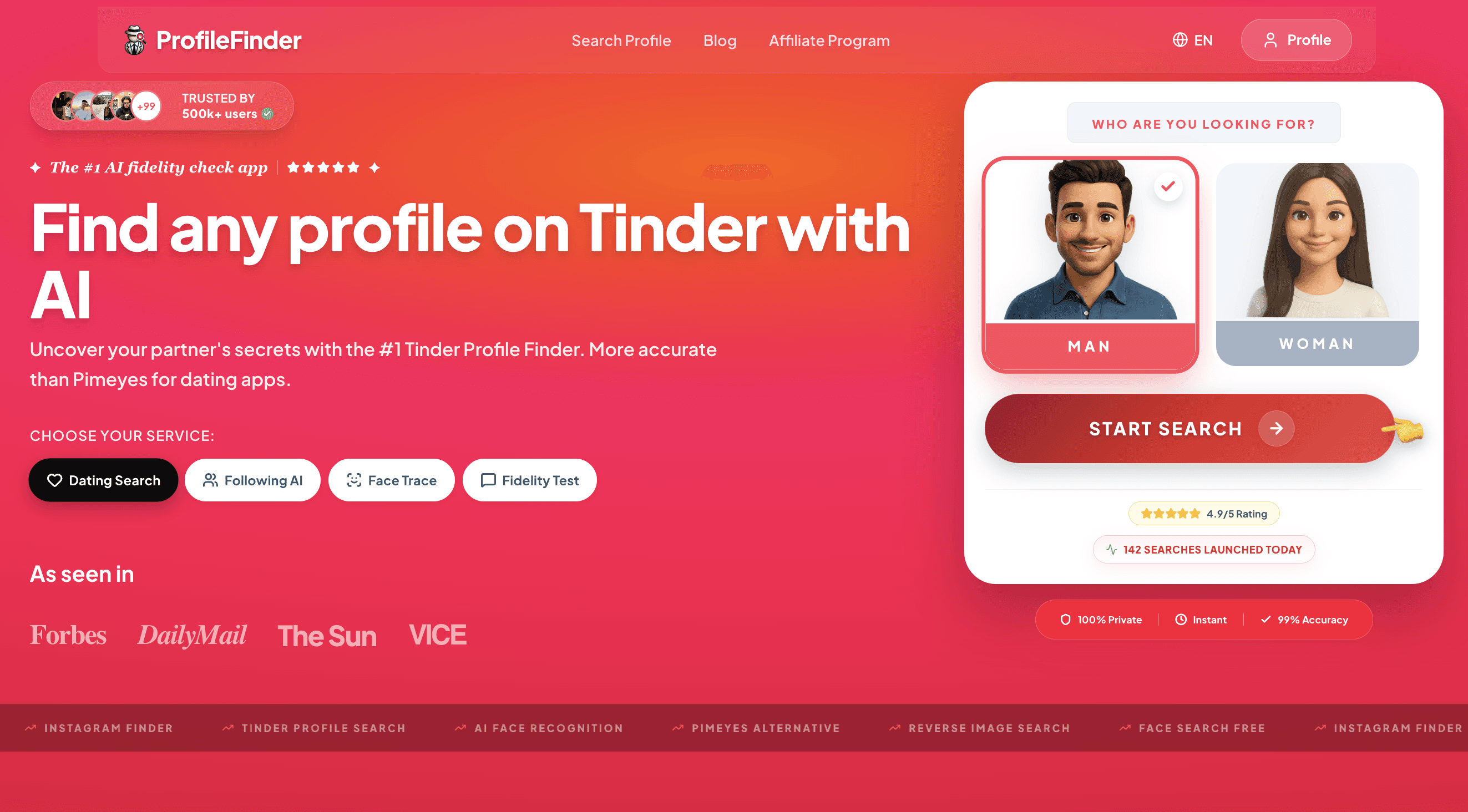
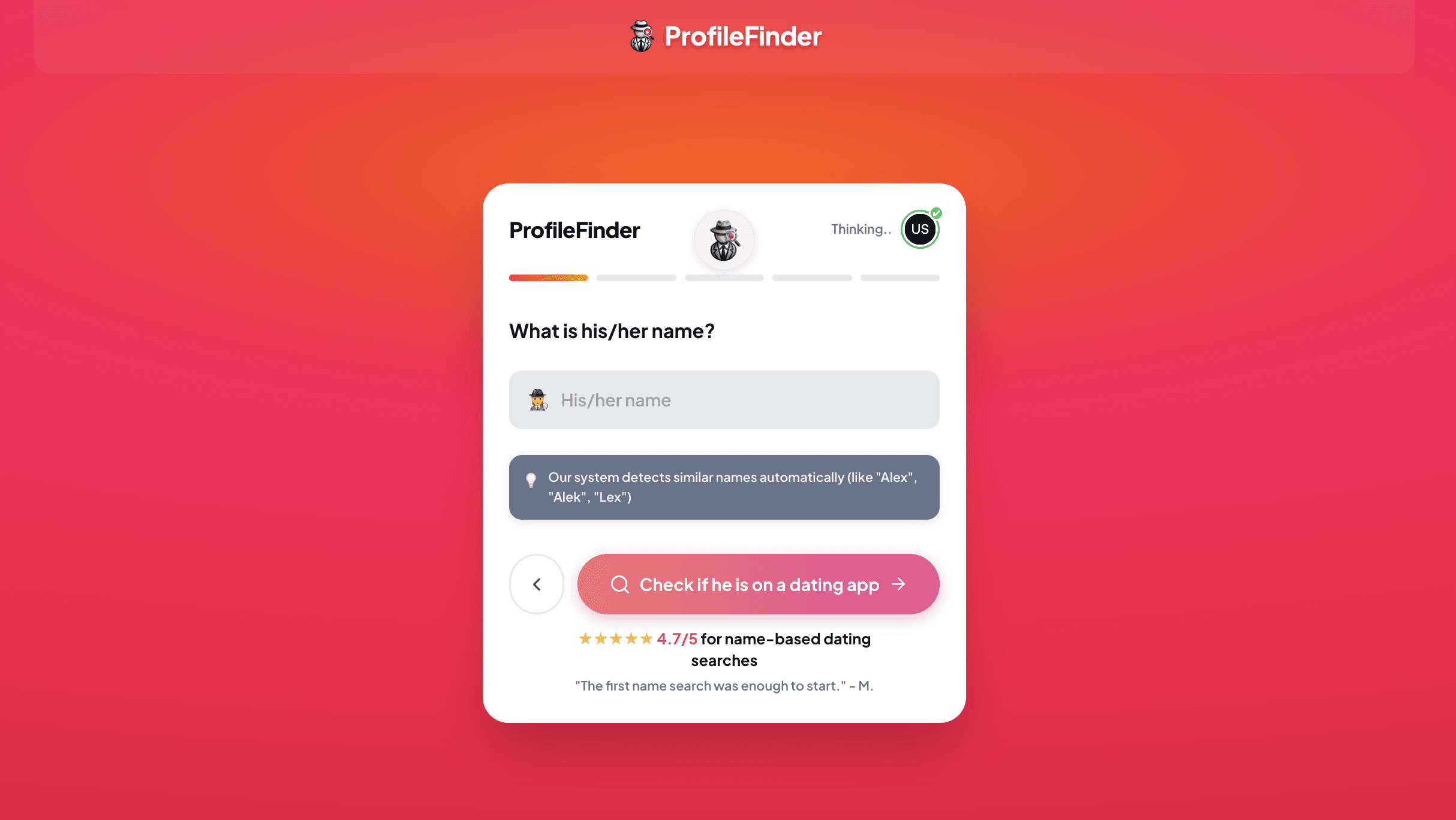
Step 2: Enter the first name you can verify
Input the person's real first name. Avoid guessing obscure aliases unless they are known to use them online. A common name will return multiple possible matches, making location and age essential filters.
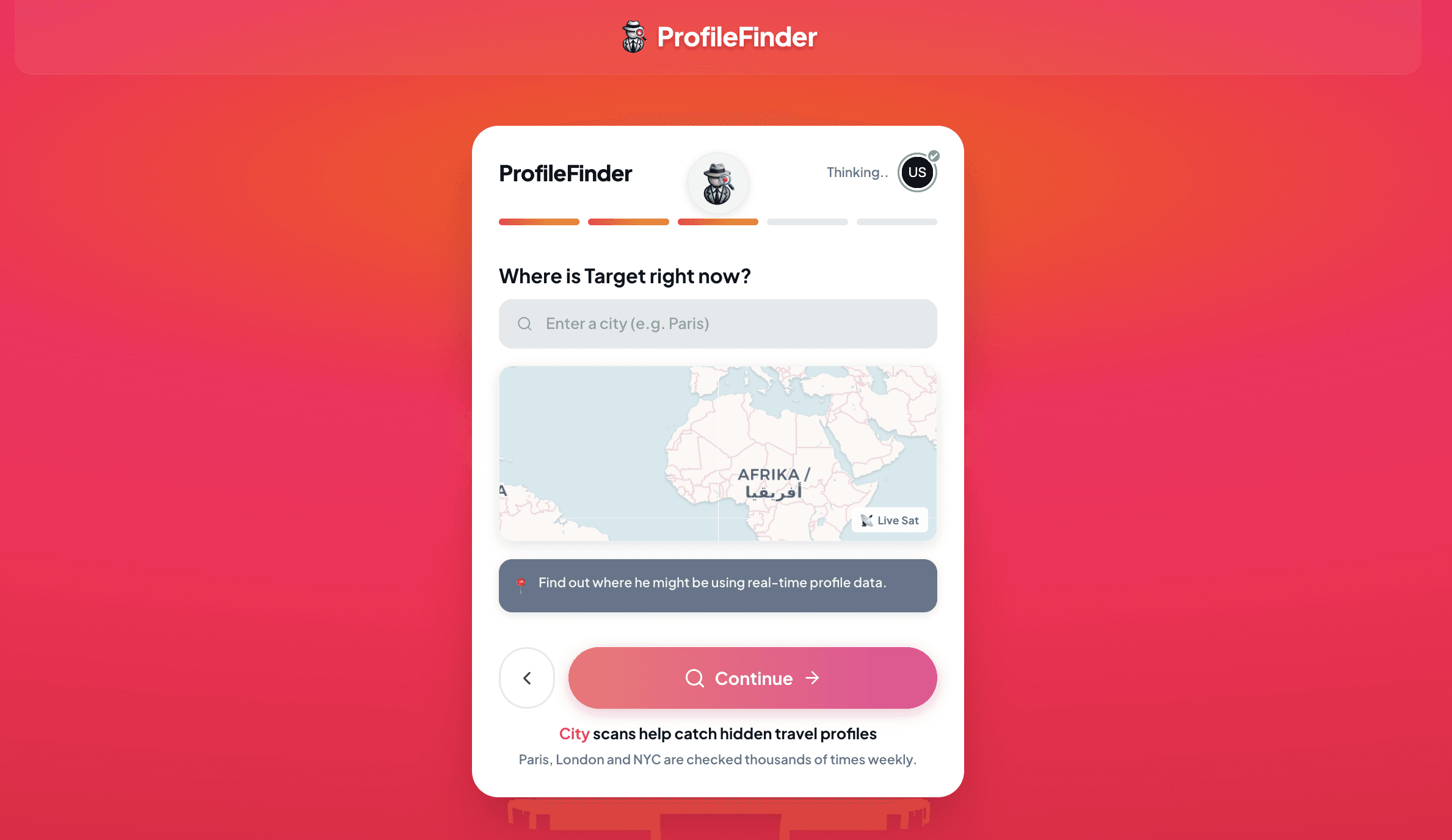
Step 3: Add an approximate age and location
Select the most accurate age and enter the city or metropolitan area where the person is most likely active. If your spouse travels frequently for business, enter both your home area and their recurring business travel cities.
Step 4: Launch the search
Submit the search to scan public dating network data across major platforms. The system compiles potential matches without accessing private messages or breaching device security.
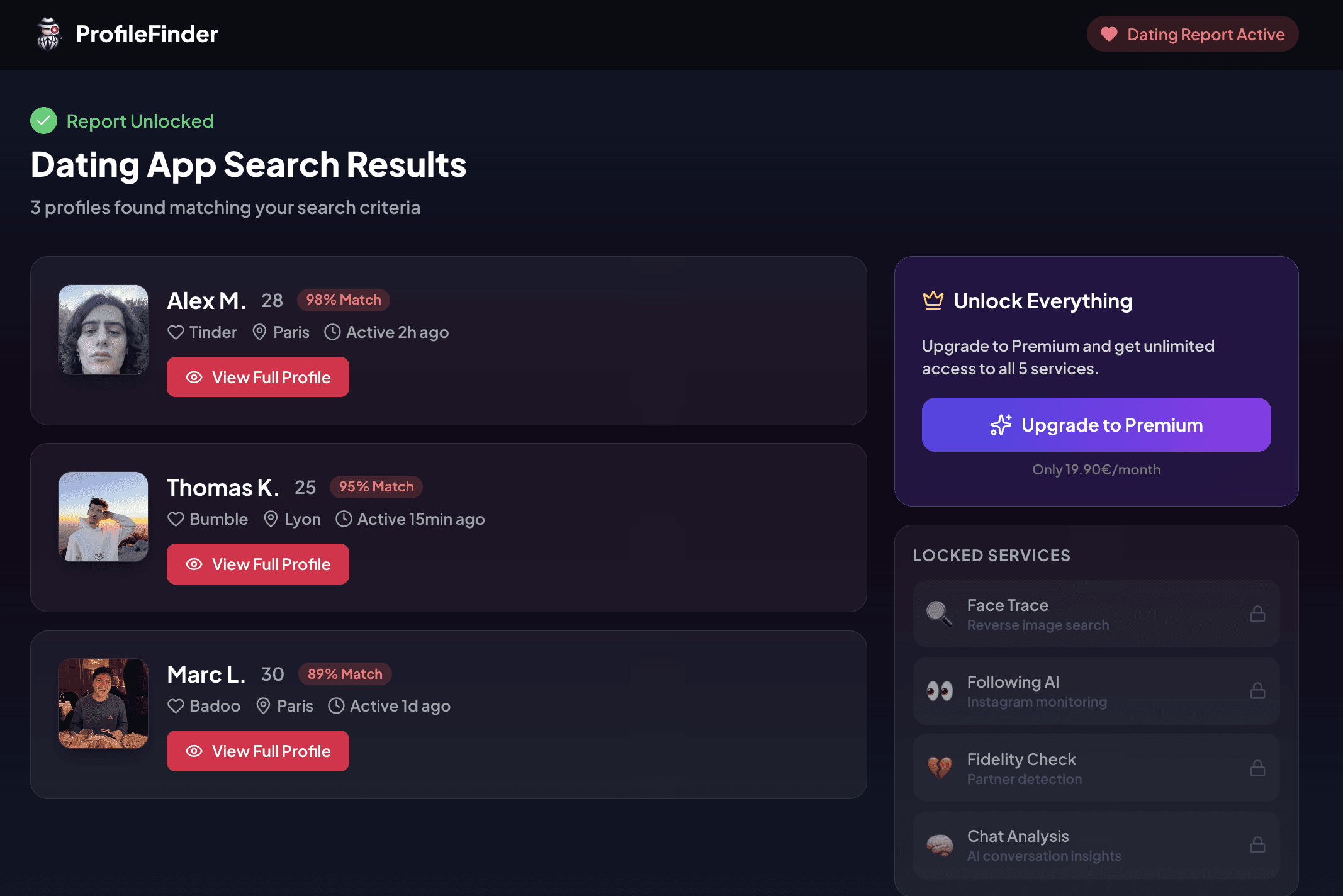
Step 5: Review possible matches and cross-check details
Review the profile cards carefully. Compare multiple independent data points—including photos, age, bio information, and city. Never rely on a single visual match or name similarity to draw definitive relationship conclusions.
1. Dedicated Extramarital & Discreet Affair Platforms
Unlike standard dating platforms that promote long-term romance, dedicated affair websites are explicitly marketed to individuals in committed relationships seeking secret liaisons.
Ashley Madison and International Equivalents
Ashley Madison remains the most prominent brand in this space, operating across dozens of countries with millions of registered accounts. The platform is designed around discretion: members can blur or mask their profile photos, communicate via credit-based messaging systems, and click a "panic button" that instantly redirects the screen to a neutral shopping website or search engine.
Gleeden and Victoria Milan
In Europe and Latin America, platforms like Gleeden and Victoria Milan operate on similar principles. Gleeden is marketed primarily to women, offering free access to female users while charging male members for messaging credits. Victoria Milan highlights total anonymity and automated photo blurring tools.
2. Discreet Hookup & Adult Encounter Networks
For individuals seeking purely physical, non-emotional encounters, adult encounter websites provide rapid, location-based matching.
Adult Friend Finder and Casual Adult Communities
Adult Friend Finder is one of the oldest web-based adult networks in existence. It operates through open web browsers and mobile web portals rather than standard app stores. Users can browse live member webcams, message nearby adults, and join specialized interest groups. Because of its open web format, it avoids Apple App Store and Google Play Store purchase histories entirely.
3. Hypergamous and "Sugar" Dating Platforms
A growing segment of extramarital involvement occurs on platforms designed around mutually beneficial financial and lifestyle arrangements.
Seeking (Formerly Seeking Arrangement)
While Seeking rebranded to position itself as an upscale dating community, it remains heavily populated by married benefactors seeking discreet arrangements with younger partners. Profiles openly discuss travel companionship, allowances, and schedule expectations. These relationships often involve secret hotel bookings, weekend travel excuses, and off-the-books financial transfers.
4. Mainstream Dating Platforms Used via Web Browsers
Infidelity frequently occurs on mainstream platforms (Tinder, Bumble, and Hinge) accessed through web interfaces rather than mobile apps.
Why People Use Tinder Online and Bumble Web
Both Tinder and Bumble offer full-featured web portals (tinder.com and bumble.com). An individual can sit at an office desk or open a laptop in private, access their dating account through a private browser tab, and close the window when finished. This tactic completely bypasses smartphone app auditing, leaving no mobile app icon or notification banners.
Digital Paper Trails: How Affair Sites Leave Real Traces
Despite aggressive privacy features, web-based infidelity almost always generates digital footprints across financial records, browser environments, and secondary accounts.
1. Disguised Billing Descriptors on Financial Records
Affair websites and adult communities charge for memberships and message credits. Because banks require transparent transaction processing, charges cannot be completely hidden. Companies use discreet corporate billing descriptors to conceal the website name.
Common examples include generic abbreviations such as "AM Member Services", "AV*Help", or vague technology consulting names. If recurring, unfamiliar charges appear on credit card or PayPal statements, search the exact descriptor in Google to identify the processing merchant.
2. Browser Cache, Autofill Data, and DNS Artifacts
Even when users browse in incognito or private modes, traces can linger:
Autofill Suggestions: When typing the first letter of an affair site into a browser address bar, the browser may suggest full URLs if cookies were not cleared.
DNS Cache: On shared Wi-Fi networks or personal computers, local DNS caches log domain lookup requests regardless of private browsing modes.
Email Password Resets: If a secondary account was created, password managers (such as Apple Keychain or Google Password Manager) often save the credentials automatically unless disabled.
3. Secondary Email Accounts and Password Vaults
Affair websites require a valid email address for account activation and password recovery. Individuals frequently create secondary "burner" Gmail or Outlook accounts solely for extramarital correspondence. Look for multiple Google accounts logged into the browser profile switcher.
Did Your Partner Actually Join? Understanding Spam vs Active Accounts
Discovering a promotional email from Ashley Madison or a hookup site in a partner's spam folder is not automatic proof that they registered. Romance scammers and spam networks routinely harvest public email lists and register fake profiles or send phishing links. Before drawing conclusions, verify whether an active profile exists with verified photos and matching demographic information.
Frequently Asked Questions
What is the most popular cheating website?
Ashley Madison remains the most globally recognized dedicated affair website, followed by platforms like Adult Friend Finder and Seeking.
How do cheating websites show up on credit card statements?
They use discreet merchant billing descriptors (such as 'AM Member Services' or generic corporate abbreviations) rather than the direct website name. Researching the descriptor online reveals the merchant.
Can someone use Tinder or Bumble on a computer without the app?
Yes. Both Tinder and Bumble operate web-based portals (tinder.com and bumble.com) where users can log in, swipe, and message from a desktop browser without installing the phone app.
What is a panic button on an affair website?
A panic button is a built-in feature that instantly redirects the user's browser to an innocent website (like Google or a news site) if someone walks into the room.
Can ProfileFinder search inside private affair websites like Ashley Madison?
No. ProfileFinder does not hack password-protected affair sites. It searches public dating profiles across open networks (Tinder, Bumble, Badoo) where users register publicly accessible profiles.
What should I do if I find an affair site in my spouse's browser history?
Take a screenshot of the URL, timestamp, and context. Check if there are corresponding financial charges, and prepare for an honest, calm discussion.
Can promotional emails from affair sites appear without signing up?
Yes. Spam networks frequently send unsolicited marketing emails or use leaked email lists. An email alone is not definitive proof; look for account confirmations or matching public profiles.
Are cheating websites legal?
Yes. Operating and joining dating and affair websites is completely legal for consenting adults in most democratic countries.
Do cheating websites notify users if someone searches for their profile?
No. ProfileFinder runs independent queries and never notifies or alerts the individual searched.
What is the best way to verify if my partner is cheating online?
Start with an objective, lawful search on ProfileFinder to see if active public dating profiles exist, and evaluate financial and behavioral patterns calmly.
📚 Related Readings
Best Websites to Catch a Cheater in 2026: What Each Tool Can Find
Cheating Apps to Look For in 2026: Dating, Messaging & Hidden Apps
Best Apps to Catch a Cheater in 2026: Tools & Methods Compared
How to Catch a Cheating Spouse: Signs, Dating Apps & Ways to Verify
When investigating suspected online infidelity, focus on observable facts rather than speculation. Search public dating databases safely with ProfileFinder's Cheater Finder.