

Searching for "cheaters website" or "websites to catch a cheater" yields a chaotic mix of results. The search landscape includes community exposure forums, public records databases, revenge sites, and specialized dating search platforms.
While some platforms offer legitimate ways to verify public information, others operate predatory business models based on unverified gossip, extortion, and cyberbullying. This guide evaluates what different cheater websites actually offer, details the legal risks involved, and explains how to gather facts lawfully.
⚡ Quick Answer
Cheater websites fall into three distinct types: community 'name-and-shame' exposure registries (which carry severe defamation and extortion risks), public record background search engines, and dedicated dating profile search tools like ProfileFinder. Avoid exposure forums completely: their posts are unverified, filled with false accusations, and frequently charge victims hundreds of dollars to remove slanderous content. For safe, reliable results, stick to lawful search tools that query public dating profiles objectively.
| Website Category | Representative Examples | Core Functionality | Legal & Privacy Risks | Verdict |
|---|---|---|---|---|
| Dedicated Dating Lookups | ProfileFinder, Cheaterbuster | Searches public dating platform databases by name, age, and location | Safe; uses only indexed public profile records | Recommended; focused and objective |
| Exposure & 'Name & Shame' Forums | CheatShield, BadBizFinder, gossip blogs | User-submitted claims, photos, and accusations of infidelity | High defamation, harassment, and extortion liabilities | Avoid; filled with fabricated drama and removal scams |
| Public Records Portals | BeenVerified, Spokeo, TruthFinder | Aggregates public government records, phone numbers, and addresses | Zero legal risk; regulated by FCRA guidelines | Useful for identity checks, useless for dating profiles |
| Extramarital Affair Websites | Ashley Madison, Victoria Milan | Platforms facilitating discreet dating for married individuals | Account security leaks; high financial cost | Websites used for cheating, not catching cheaters |
How to Search Public Dating Profiles With ProfileFinder
If you want to know whether your partner is active on dating sites, avoid scandalous exposure forums. ProfileFinder delivers objective data directly from dating platforms.
Step 1: Open ProfileFinder
Open ProfileFinder's dating search or the dedicated Cheater Finder. You do not need to create an account, install third-party tracking software, or notify the person you are searching for.
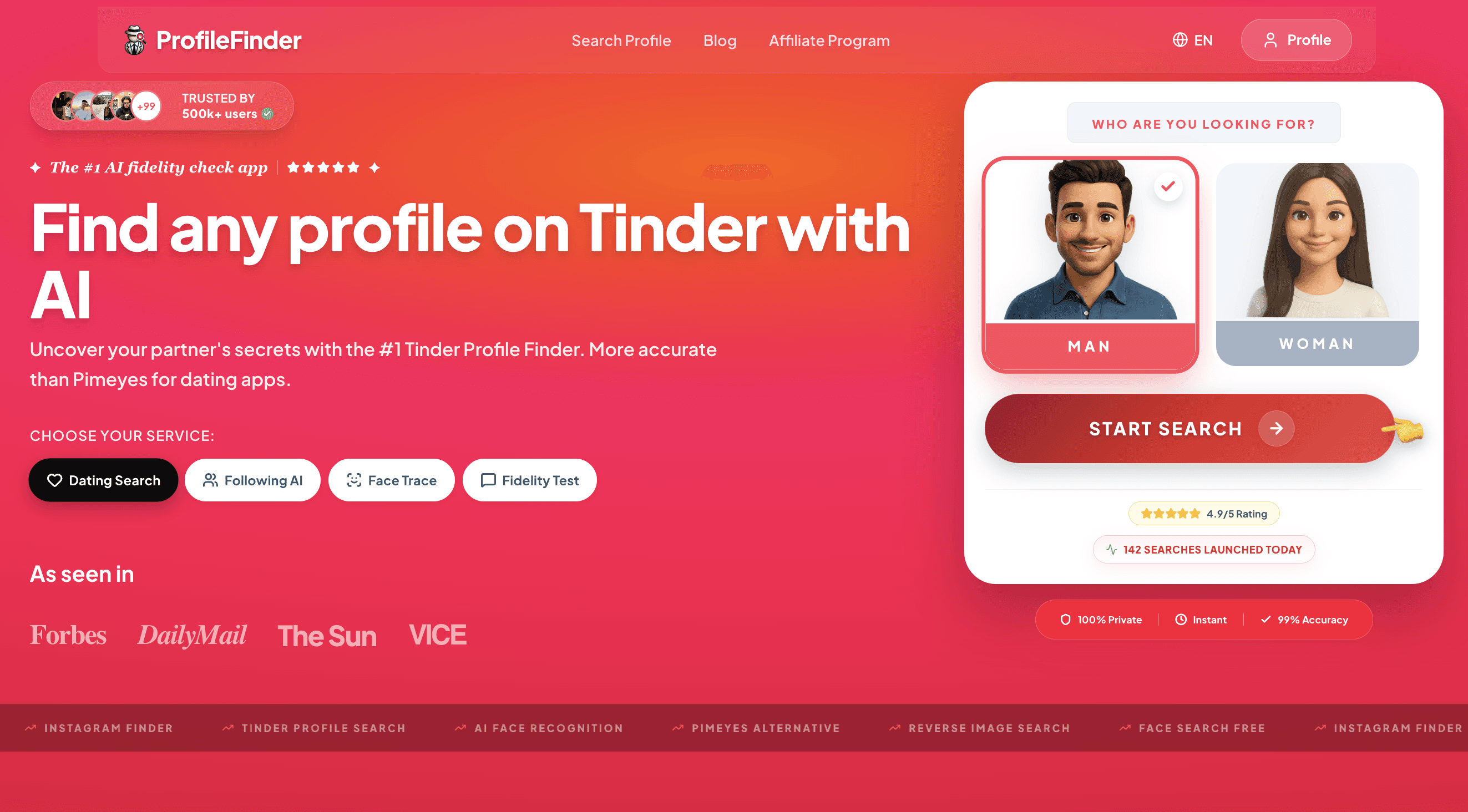
Step 2: Enter the first name you can verify
Input the person's real first name. Avoid guessing obscure aliases unless they are known to use them online. A common name will return multiple possible matches, making location and age essential filters.
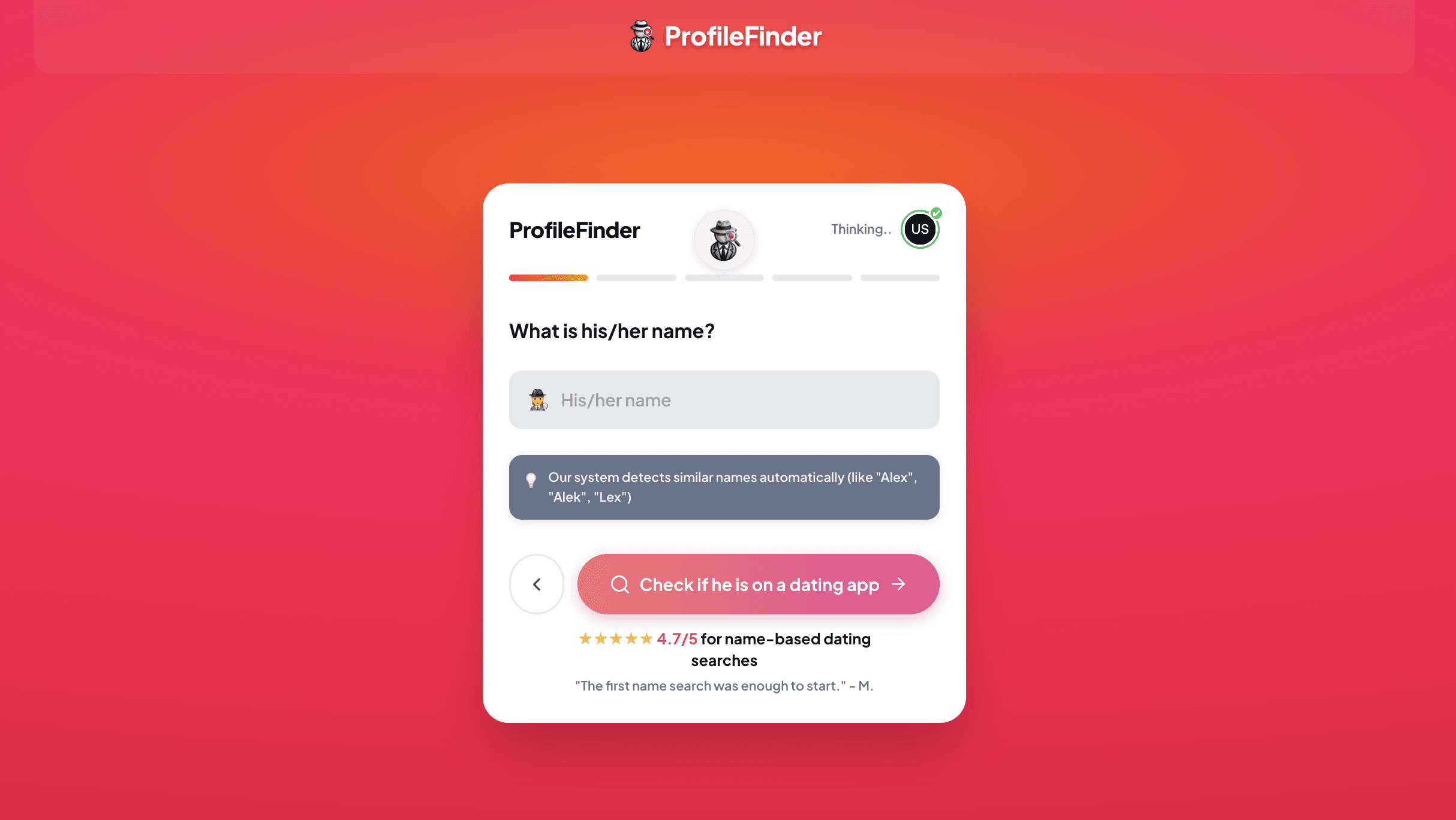
Step 3: Add an approximate age and location
Select the most accurate age and enter the city or metropolitan area where the person is most likely active. Enter their primary city and any secondary locations where they travel frequently.
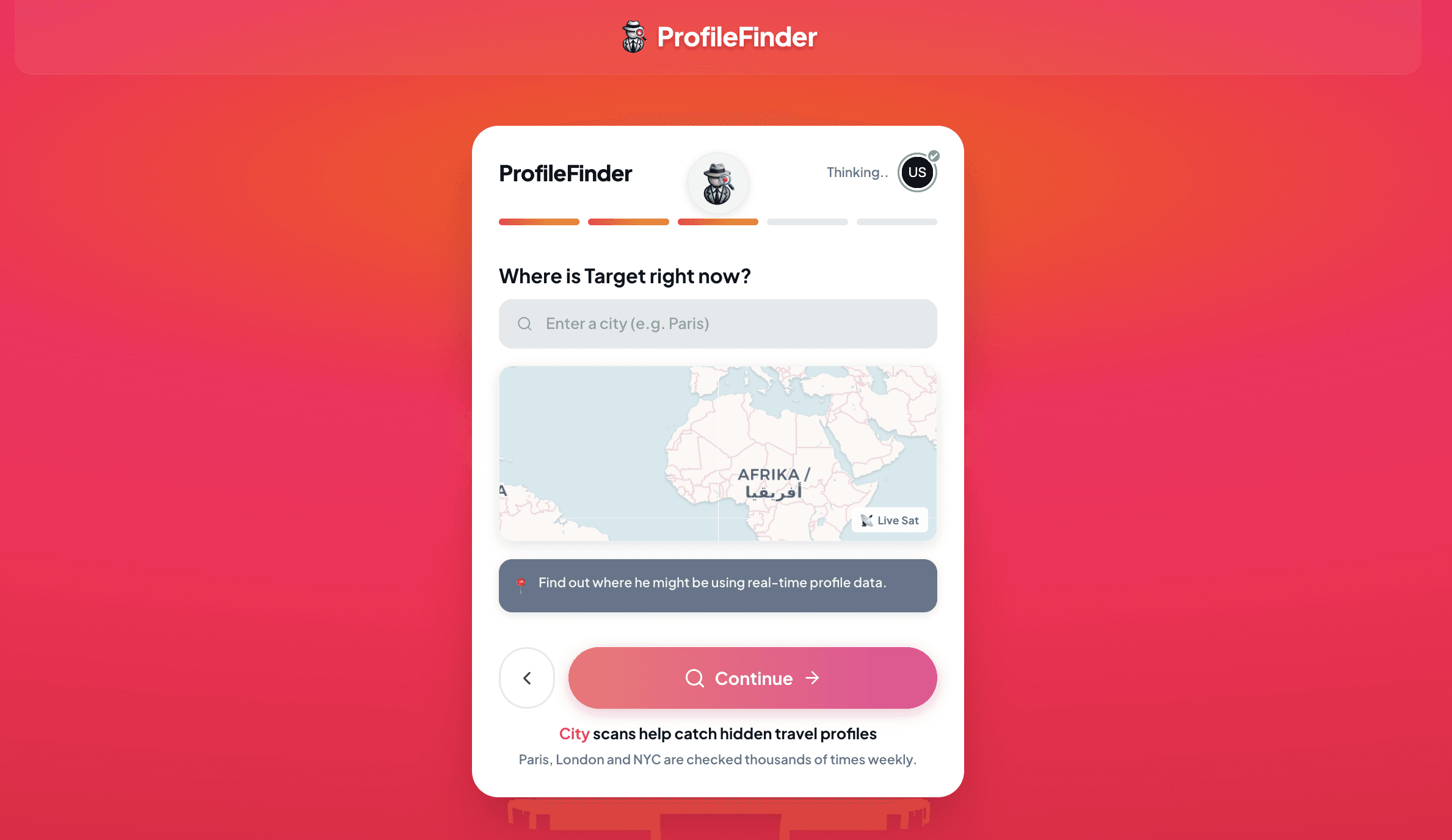
Step 4: Launch the search
Submit the search to scan public dating network data across major platforms. The system compiles potential matches without accessing private messages or breaching device security.
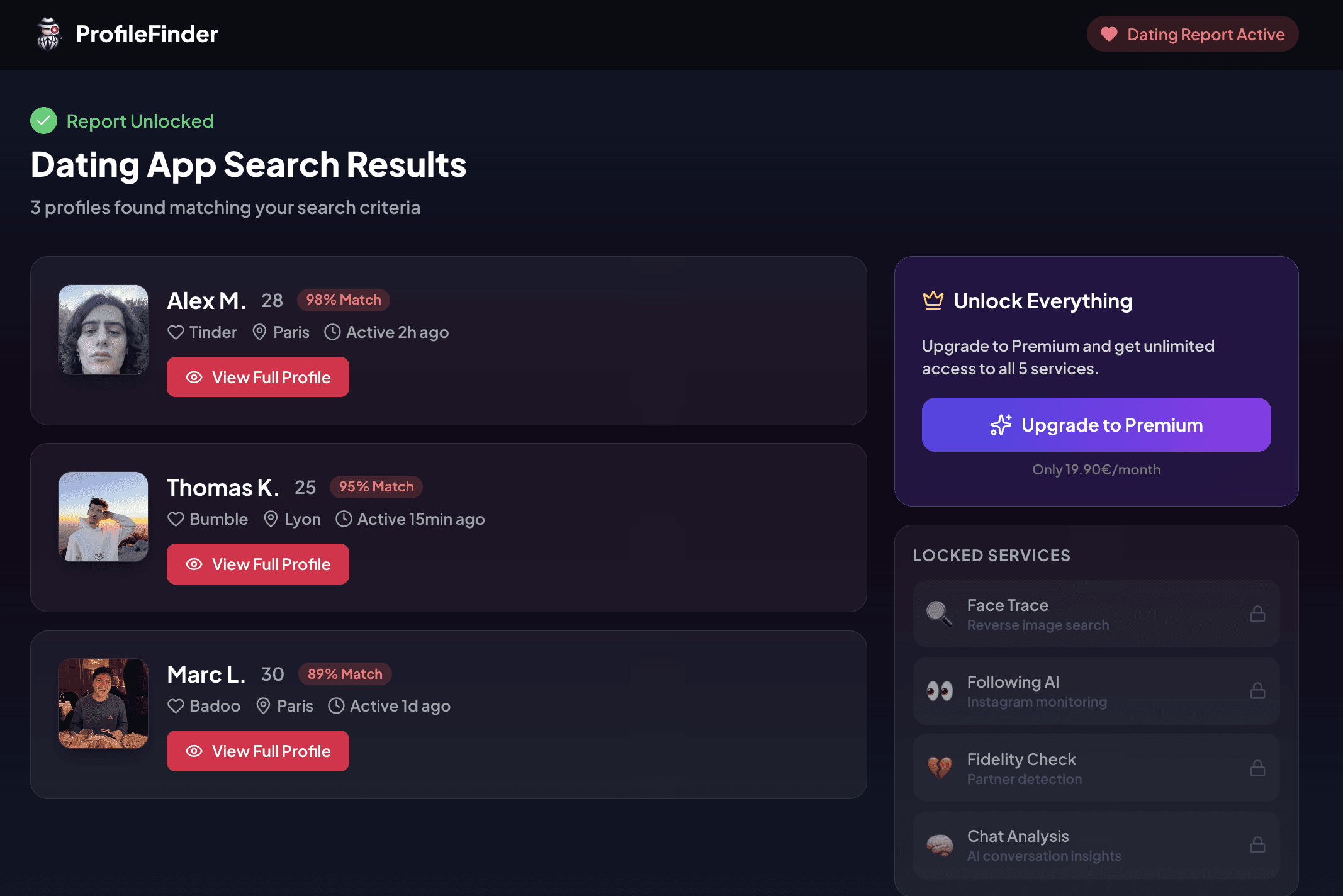
Step 5: Review possible matches and cross-check details
Review the profile cards carefully. Compare multiple independent data points—including photos, age, bio information, and city. Never rely on a single visual match or name similarity to draw definitive relationship conclusions.
1. "Name and Shame" Cheater Registries & Exposure Forums
A prominent category of cheater websites consists of public message boards where anonymous users post allegations, photographs, and phone numbers of people they claim are unfaithful.
The Danger of Unverified Community Allegations
Anyone with an internet connection can submit an entry to an exposure forum without providing evidence or verifying their identity. Bitter ex-partners, business rivals, or internet trolls frequently submit completely fabricated stories to ruin a person's professional and personal reputation. There is zero editorial oversight or fact-checking on these platforms.
Paid Removal Scams and Extortion Business Models
Many exposure websites operate an extortion scheme. After an unverified post is published, the site operator or an affiliated "reputation management" entity contacts the accused individual offering to remove the defamatory post for fees ranging from $400 to $2,000. Paying these fees often results in the post reappearing on a mirrored domain weeks later.
Defamation, Revenge Porn Laws, and Civil Liability
Posting private allegations, intimate photos, or identifying information to a public cheater forum carries severe legal consequences. In the United States, victims of false online posts routinely file defamation per se lawsuits against posters. Furthermore, sharing intimate images without consent violates non-consensual pornography laws in over 48 states, carrying criminal penalties.
2. Public Record Directories & People-Search Engines
General people-search portals aggregate publicly available government data, property deeds, phone directories, and court filings.
What Public Records Can Verify
These websites can help you verify background facts—such as confirming someone's real legal name, checking marriage and divorce certificates, finding undisclosed secondary addresses, or reviewing criminal records. The Federal Trade Commission outlines consumer rights regarding public records under the FTC guidance on consumer protection and scams.
Why Public Records Do Not Solve Cheating Suspicions
Dating profiles on Tinder, Bumble, or Hinge are not public government filings. They do not appear on deed records or background checks. A people-search report cannot tell you whether a spouse is swiping on dating apps tonight.
3. Dedicated Dating Profile Search Platforms
The most targeted and lawful approach to investigating online infidelity is using a dedicated dating profile search engine like ProfileFinder.
Scanning the Public Dating Ecosystem Objectively
Dedicated search tools operate by indexing publicly available dating profiles. Rather than relying on anonymous user gossip, they query live database records to see if an account matching the target's first name, age, and location exists across major dating apps.
Distinguishing Stale Profiles from Current Activity
One critical advantage of dedicated search tools is the ability to inspect profile cards directly. You can evaluate whether profile photos show recent hairstyles and locations, or whether the account was abandoned years ago before your relationship began.
Evaluating Website Results: The Verification Checklist
Before you accept any claim found on a website as truth, run it through this structured verification checklist.
| Checkpoint | Question to Ask | Why It Matters |
|---|---|---|
| Source Verifiability | Is the information coming from an indexed platform or an anonymous user forum? | Community posts are often malicious fabrications; platform data is objective |
| Corroborating Identifiers | Do photos, age, city, and biography details all line up independently? | One matching first name in a large city is statistically meaningless |
| Freshness of Records | Are the photos recent, or are they from several years in the past? | Many people forget to delete old dating profiles when entering relationships |
| Financial Motive | Is the website demanding money to see full details or remove a post? | Scam sites intentionally manufacture false alerts to extract credit card payments |
What to Do if Someone Posted About Your Partner (or You) Online
If you discover that your partner or you have been targeted on an exposure website, take deliberate steps to protect your rights:
Preserve full digital evidence immediately. Take full-page screenshots including URLs, dates, and timestamps before the poster edits or hides the content.
Do not engage in the comments or pay removal fees. Responding publicly bumps the page in search engine rankings. Paying extortion demands signals that you are vulnerable, often resulting in duplicate posts.
Submit Google De-indexing Requests. Google allows individuals to request the removal of personally identifiable information (PII) and non-consensual explicit imagery from search results. Review Google's official documentation on removing your personal information from Google Search.
Consult an internet defamation attorney. A formal cease-and-desist letter or subpoena to the web host can compel the disclosure of the poster's IP address and force permanent removal.
Frequently Asked Questions
What is a cheaters website?
A cheaters website can refer to community exposure forums (where anonymous users post infidelity accusations), public records search sites, or dedicated dating profile search engines like ProfileFinder.
Are cheater exposure websites reliable?
No. Exposure forums have zero verification standards and are frequently used by angry exes or trolls to post defamatory fabrications. They often operate extortion schemes charging victims to remove posts.
Can I find out if my partner is on dating sites through a website?
Yes. Dedicated platforms like ProfileFinder allow you to search publicly indexed dating profiles across major platforms using a name, age, and location.
Can someone post my picture on a cheater website without my permission?
While people sometimes do, it often violates copyright law, right-of-publicity statutes, and state non-consensual image sharing laws. Victims can pursue legal removal and civil damages.
How do I get my name off a cheater website?
Do not pay the site's removal fees. Instead, submit a de-indexing request to Google Search under their PII removal policies, send a DMCA copyright takedown if you own the photo, or hire an internet defamation attorney.
Does ProfileFinder post user accusations or ratings?
No. ProfileFinder is an objective search tool that queries publicly accessible dating profiles. It does not allow user comments, ratings, public forums, or gossip.
Are people-search websites like BeenVerified useful for finding cheaters?
They can help verify real names, phone numbers, and past addresses, but they do not index active dating app accounts or private messaging apps.
Can an innocent person be falsely accused on a cheater website?
Yes. False accusations on gossip sites are extremely common due to mistaken identity, malicious exes, or extortion scams.
Is searching for someone on ProfileFinder confidential?
Yes. ProfileFinder searches are completely private. No notifications or alerts are ever sent to the person being searched.
What is the best alternative to scandalous cheater websites?
Use a focused, respectful search tool like ProfileFinder to check for public dating profiles, combined with open, honest communication with your partner.
📚 Related Readings
Best Apps to Catch a Cheater in 2026: Tools & Methods Compared
How to Catch a Cheating Spouse: Signs, Dating Apps & Ways to Verify
Avoid the toxicity and legal traps of gossip registries. Verify the facts objectively by searching public dating databases with ProfileFinder's Cheater Finder.