

When relationship doubts arise, hundreds of mobile apps and web services promise to reveal whether a partner is unfaithful. These tools range from legitimate public-record search engines and reverse image lookup tools to dangerous spyware utilities and outright financial scams.
Sorting through these options is challenging when emotional stakes are high. This independent comparison examines the primary categories of apps marketed to catch cheaters, evaluates their real-world accuracy and legal boundaries, and explains how to gather facts safely without violating privacy laws.
⚡ Quick Answer
The most effective and lawful apps to catch a cheater are dedicated dating profile search engines and reverse image search tools. Platforms like ProfileFinder search public dating profiles across multiple networks using basic demographic details, while tools like Google Lens help uncover stolen or reused photos. Conversely, you must strictly avoid phone spyware (such as mSpy or Eyezy), which violates federal wiretap laws, compromises device security, and is legally inadmissible in divorce proceedings. Always rely on open-source intelligence and verified evidence before drawing conclusions.
| Tool Category | Representative Examples | Primary Capability | Legal / Privacy Risk | Overall Recommendation |
|---|---|---|---|---|
| Dating Profile Search Engines | ProfileFinder, Cheaterbuster | Scans public dating platforms (Tinder, Bumble, Badoo) for matching names and photos | Zero risk; queries only publicly accessible profile data | Best choice for verifying dating app activity discreetly |
| Reverse Image Search | Google Lens, PimEyes, FaceCheck | Finds instances where photos appear across social networks and the open web | Low to moderate; public web data only | Helpful for catching catfishes and reused dating photos |
| People Search & Public Records | Spokeo, BeenVerified, TruthFinder | Aggregates criminal records, property deeds, phone numbers, and relatives | Zero risk; FCRA limitations apply | Useful for verifying real identity; rarely uncovers active dating profiles |
| Spyware / Phone Trackers | mSpy, FlexiSPY, Hoverwatch | Logs keystrokes, secret SMS, phone GPS, and WhatsApp chats via root/jailbreak | Severe; violates Federal Wiretap Act and CFAA; criminal liability | Do not use; illegal, dangerous, and unreliable |
| Cheater Exposure Forums | CheatShield, DirtyCheater, local forums | User-submitted allegations and unverified partner photos | High defamation, extortion, and doxxing risks | Avoid completely; plagued by fake posts and paid removal scams |
How to Verify Dating Profiles Safely With ProfileFinder
Rather than risking legal liability by accessing a partner's personal phone, ProfileFinder allows you to verify whether dating accounts exist across major networks through an objective, lawful search.
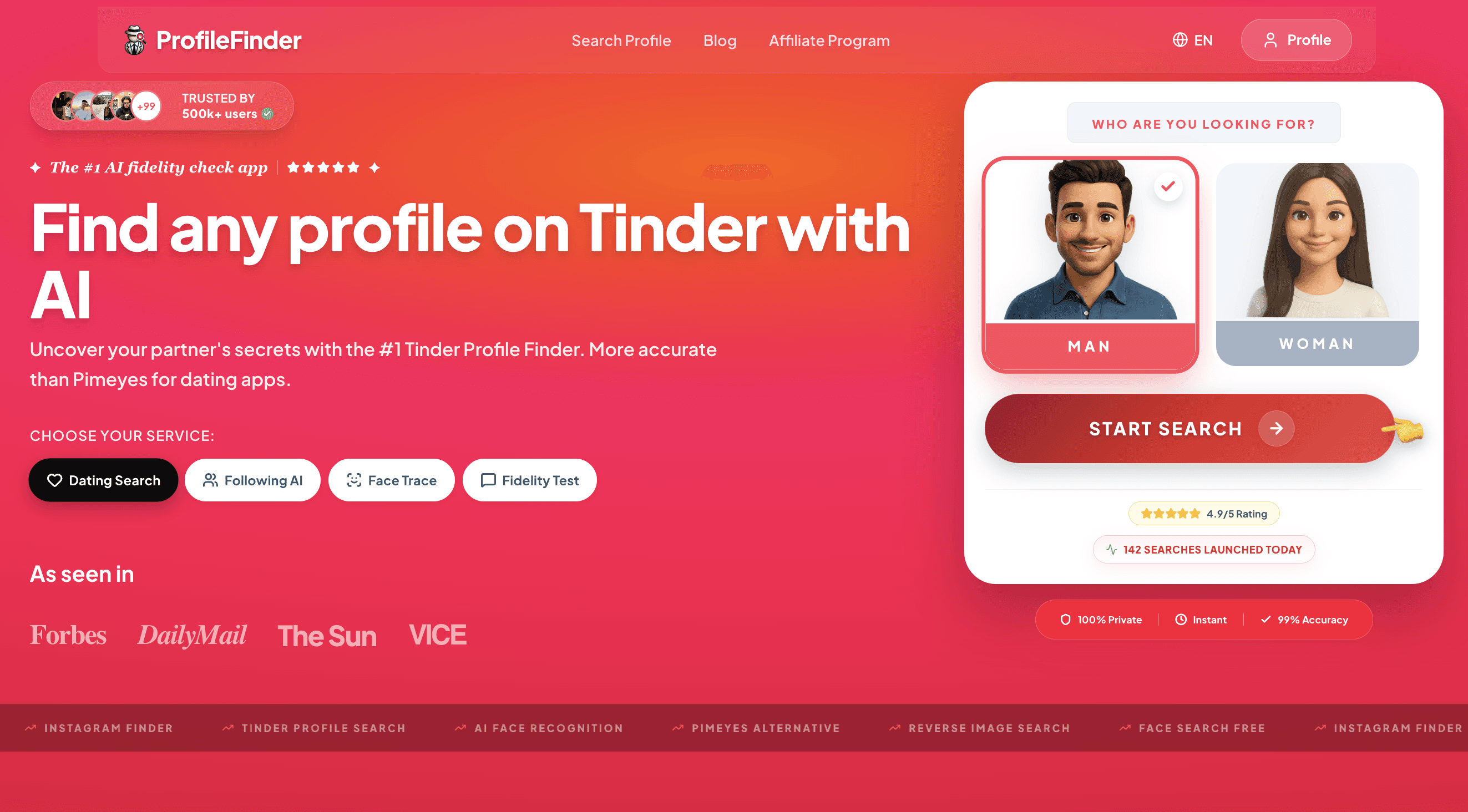
Step 1: Open ProfileFinder
Open ProfileFinder's dating search or the dedicated Cheater Finder. You do not need to create an account, install third-party tracking software, or notify the person you are searching for.
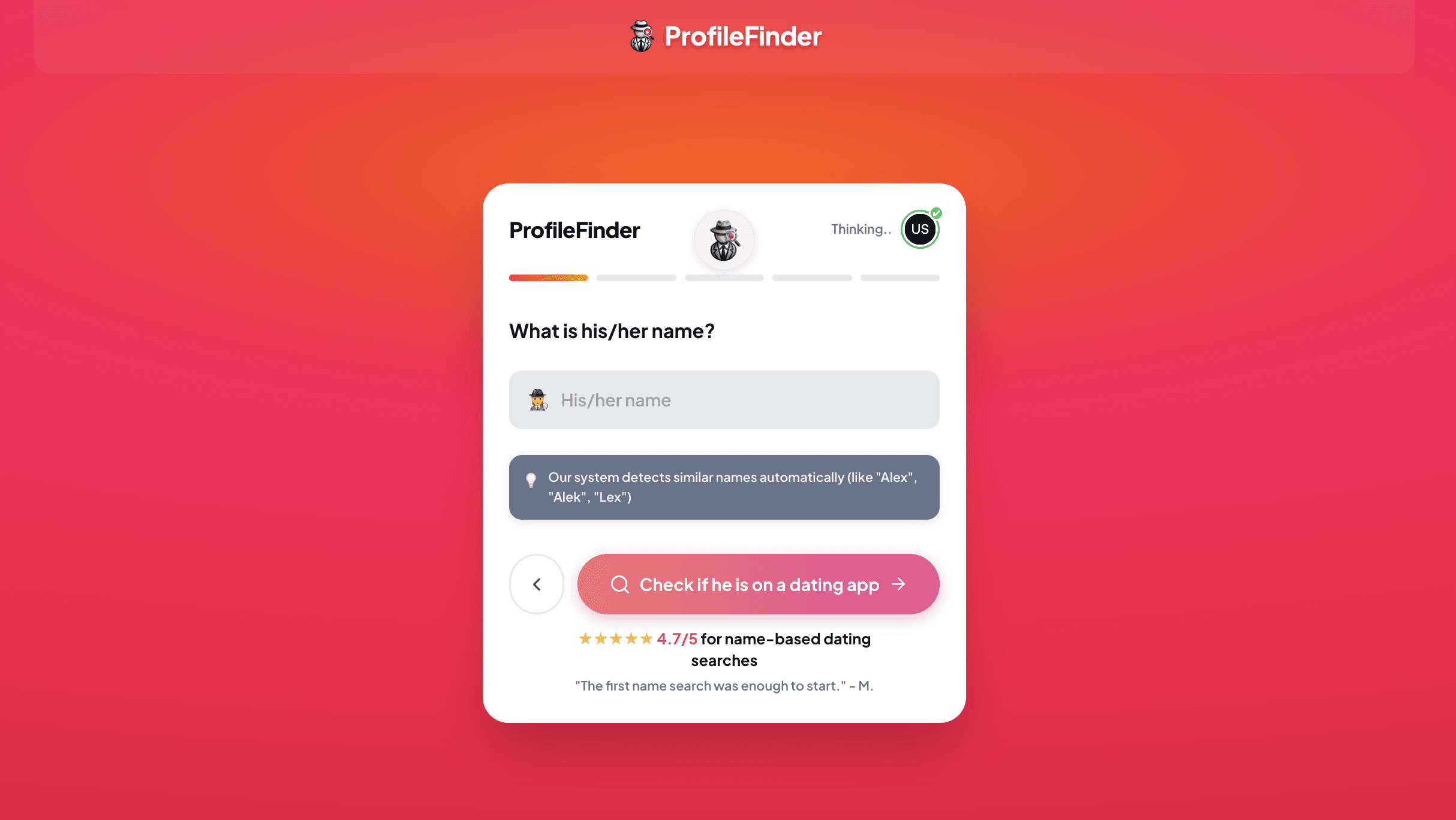
Step 2: Enter the first name you can verify
Input the person's real first name. Avoid guessing obscure aliases unless they are known to use them online. A common name will return multiple possible matches, making location and age essential filters.
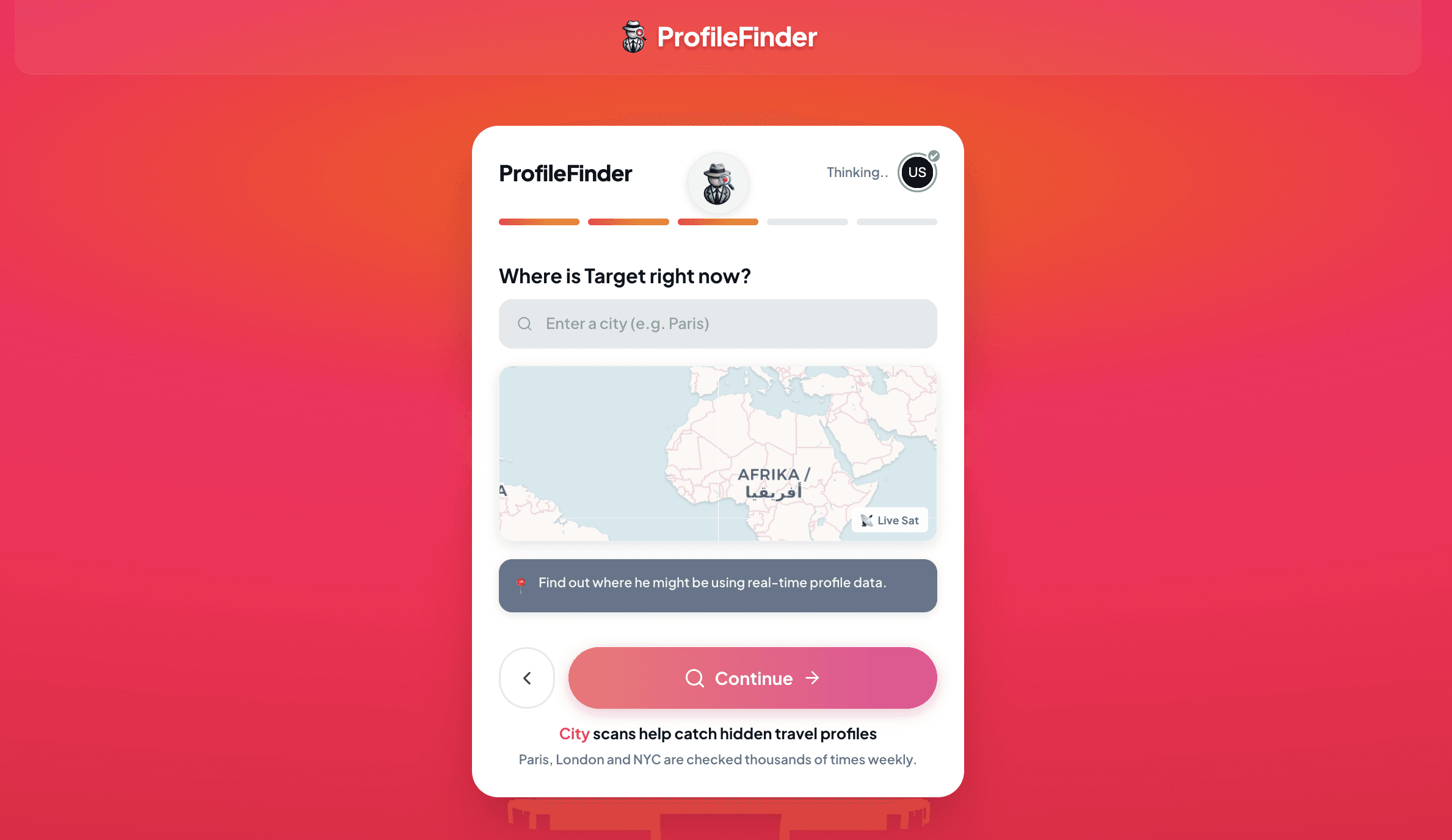
Step 3: Add an approximate age and location
Select the most accurate age and enter the city or metropolitan area where the person is most likely active. Be sure to include any recent cities where your partner traveled for vacations, conferences, or temporary work assignments.
Step 4: Launch the search
Submit the search to scan public dating network data across major platforms. The system compiles potential matches without accessing private messages or breaching device security.
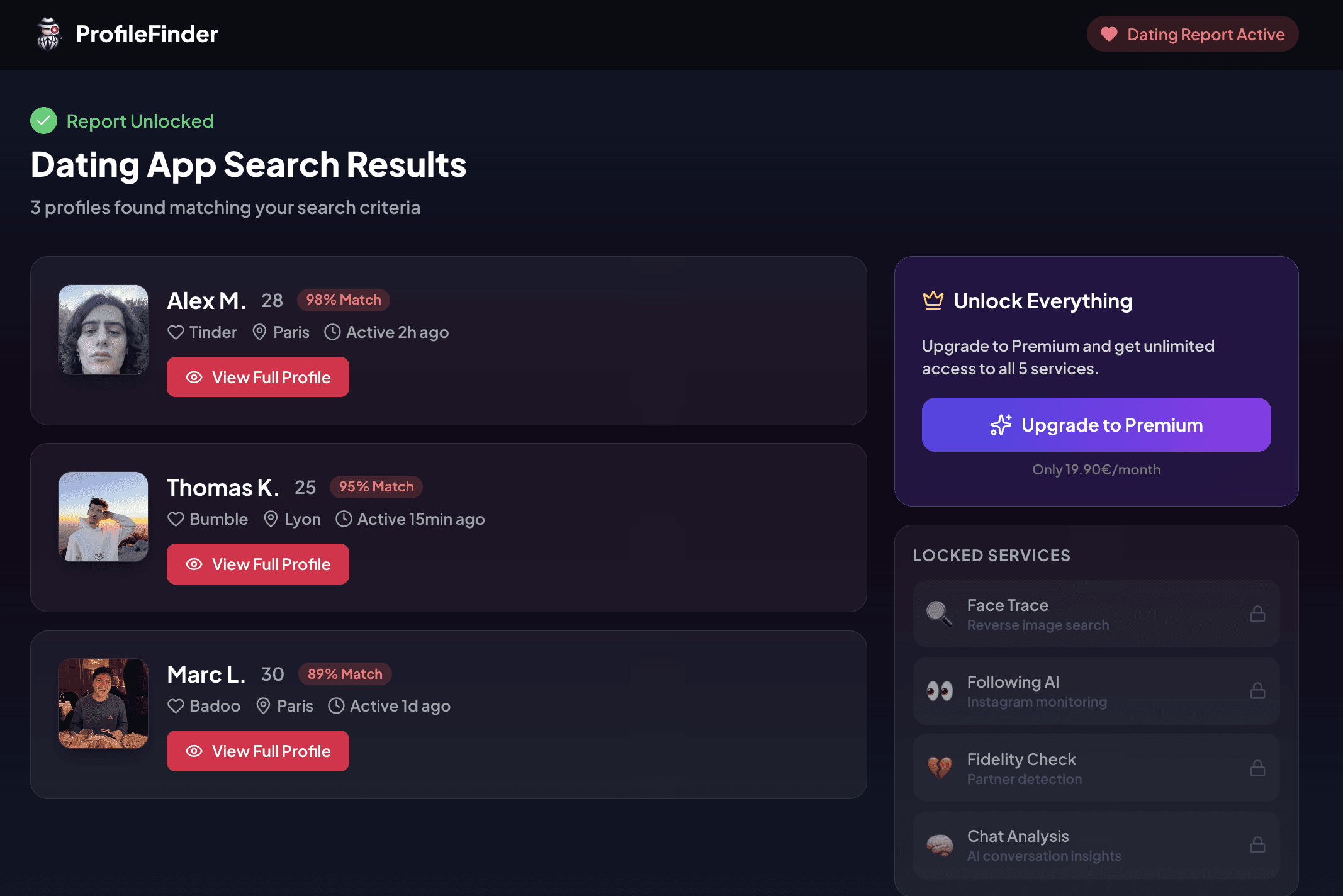
Step 5: Review possible matches and cross-check details
Review the profile cards carefully. Compare multiple independent data points—including photos, age, bio information, and city. Never rely on a single visual match or name similarity to draw definitive relationship conclusions.
1. Dedicated Dating Profile Search Engines
When infidelity is suspected, the central question is usually whether a partner maintains active profiles on dating platforms like Tinder, Bumble, or Badoo. Dedicated profile search engines are designed specifically to answer this question without requiring you to create an account or swipe manually.
Why Dedicated Search Outperforms Manual Swiping
Attempting to find a partner by creating a dummy account and swiping inside dating apps is extraordinarily inefficient. Apps restrict discovery by tight geographic radiuses, age ranges, and algorithmic queues. If your partner uses Bumble Incognito or Tinder Passport, manual swiping will never surface them. Dedicated search tools query indexed public profiles across broad geographic regions simultaneously.
ProfileFinder vs General People Search Directories
Standard people-search portals aggregate utility bills, voter registration records, and property deeds. They rarely index dating app profiles because dating platforms do not publish data to telephone directories. ProfileFinder focuses exclusively on dating ecosystems, delivering current profile cards, photos, bios, and location clues.
2. Reverse Image Search Engines (Visual Verification)
Reverse image search is an essential, no-cost tool when you possess a partner's photo or suspect that an online profile is fraudulent.
Google Lens for Open-Web Image Tracking
Google Lens analyzes the visual components of an image and identifies where identical or cropped versions appear across public websites, blogs, and social platforms. It is particularly effective for discovering whether a partner has uploaded a professional headshot to an unexpected dating site or social network. Consult Google's official guide on searching with an image on Google.
Facial Recognition Search Engines and Accuracy Limits
Specialized facial recognition engines like PimEyes and FaceCheck index photos from across the open web. While powerful, they frequently generate false positives—identifying unrelated people with similar bone structures or lighting. Never treat a facial recognition match as conclusive proof without secondary corroborating evidence.
3. Public Record Directories & People-Search Engines
Platforms like BeenVerified, Spokeo, and PeopleLooker aggregate public information into comprehensive background dossiers.
What Public Databases Can Actually Reveal
These services excel at revealing secret telephone numbers, registered secondary addresses, vehicle registrations, and associated social media handles (such as public Pinterest or Flickr accounts). They can help confirm whether an unfamiliar phone number appearing on a billing statement belongs to someone in your social circle.
Why Public Databases Rarely Prove Cheating
Public directories cannot see inside password-protected dating apps, private messages, or encrypted chat channels. Their data is often months or years out of date. While useful for verifying background identity details, they do not resolve active relationship concerns.
4. Phone Spyware & Monitoring Apps: The Serious Legal & Ethical Dangers
Commercial spyware products are heavily advertised across search engines with sensational slogans promising total remote access to text messages, WhatsApp calls, and live GPS locations.
Violations of the Federal Wiretap Act and CFAA
In the United States, installing monitoring software on an adult's phone without their explicit, informed consent is a federal crime under the Electronic Communications Privacy Act (ECPA) and the Computer Fraud and Abuse Act (CFAA). Similar strict criminal penalties exist under Canadian, European, and UK privacy legislation. Secretly gathered recordings and text logs are generally inadmissible in divorce and family court proceedings, and can expose the installer to felony charges.
Cybersecurity Risks and Data Extortion
Spyware applications require disabling native operating system security controls (rooting Android or jailbreaking iOS). Multiple cybersecurity investigations have revealed that spyware companies frequently store collected user credentials, passwords, and private family photos on unsecured cloud servers, leaving them vulnerable to data leaks and extortion.
The Evidence Ladder: Evaluating Digital Leads Objectively
Investigating relationship concerns requires emotional discipline. Drawing sweeping conclusions from incomplete clues often damages innocent relationships. Use this evidence ladder to evaluate discoveries objectively.
| Evidence Level | Observed Digital Lead | Valid Deductive Inference | Unwarranted Leap to Avoid |
|---|---|---|---|
| Possible Match | A dating profile with a similar first name and general age | A lead that warrants cross-referencing against other data | Assuming it is your partner without checking photos and bio |
| Probable Identity | Dating profile displaying verified photos, accurate age, and local city | The account was registered using your partner's likeness and details | Assuming the account is active today rather than abandoned |
| Confirmed Recent Activity | Profile displays recent location updates, recent photos, or active badges | The partner has accessed the platform recently | Assuming physical infidelity without having an open conversation |
| Verified Context | Direct admissions or verifiable independent evidence confirmed in discussion | A complete factual foundation for making relationship decisions | Retaliatory public shaming, harassment, or illegal monitoring |
How to Prepare for an Honest Relationship Conversation
If objective evidence confirms that your partner maintains an active dating profile or secret communication channel, your next step should be a calm, structured discussion rather than a confrontation fueled by anger.
Print or save objective records. Capture clean screenshots of profile cards, timestamps, and usernames. Do not rely on memory.
Choose a private, neutral time and setting. Never bring up suspected infidelity in front of children, in public venues, or late at night when fatigue escalates conflict.
Lead with observable facts, not emotional accusations. Begin by stating: "I came across this active profile with your photos and information. We need to talk about what is happening in our relationship."
Listen carefully to their explanation. Note whether they take accountability or immediately deflect by attacking how you discovered the information.
Decide on your personal boundaries in advance. Know what outcomes you are prepared to accept—whether that involves couples therapy, a temporary separation, or legal counsel.
Frequently Asked Questions
What is the best app to catch a cheater?
For verifying whether a partner has an active dating profile, ProfileFinder is the most focused and lawful search tool. For checking reused images, Google Lens is the top free option. Spyware apps should never be used.
Can an app really catch someone cheating?
An app can only surface digital clues—such as a matching dating profile, a reused photo, or an unfamiliar phone number. No app can prove infidelity on its own; context and direct conversation are always required.
Are free cheater catcher apps legitimate?
Most apps advertising 'free cheater detection' are marketing funnels that require paid subscriptions before revealing results. Free manual methods (like Google Lens reverse image search) are genuinely free and safe.
Can I catch a cheater on Tinder without joining?
Yes. You can use ProfileFinder's dating profile search to query public Tinder profile data without creating a personal account or swiping.
Is it illegal to put a spy app on my husband's or wife's phone?
Yes. Installing spyware or keylogger software on an adult's phone without their informed permission is a federal crime under wiretapping and computer crime statutes.
What if a search finds a profile with my partner's photos but a different name?
This is often a sign of catfishing or a stolen identity. Scammers frequently scrape attractive social media photos to create fake profiles. Cross-check other details before confronting your partner.
Does ProfileFinder notify the person when I search for them?
No. ProfileFinder conducts independent searches across public databases and never sends alerts, emails, or notifications to the individual searched.
How can I tell if a dating profile is currently active or just abandoned?
Look for recent seasonal photos (such as recent vacations or haircuts), current age updates, and updated bio references. Some platforms also show active status indicators.
Will cheating evidence from a spy app hold up in divorce court?
In most jurisdictions, illegally obtained evidence (such as hacked texts or unauthorized wiretaps) is thrown out under exclusionary rules and can result in civil lawsuits or criminal charges against the spouse who installed it.
What is the safest first step when I suspect cheating?
Perform a lawful, public search using ProfileFinder or reverse image lookup to verify if dating profiles exist, then schedule a calm, private discussion based on observable facts.
📚 Related Readings
Cheating Apps to Look For in 2026: Dating, Messaging & Hidden Apps
Best Websites to Catch a Cheater in 2026: What Each Tool Can Find
How to Catch a Cheating Spouse: Signs, Dating Apps & Ways to Verify
Protect your relationship and your legal standing by relying on transparent search tools rather than risky phone spyware. Start your research with ProfileFinder's dating profile search.